A personal update: I’m pausing new releases and responses for a short time while my family navigates
a serious health situation—thank you for your patience and kindness

Curator’s Notes: How Sculptural Vessels Shape a Plant’s Personality and Presence
Vessel shape isn’t just design—it’s direction; discover how tall, wide, organic, and geometric forms change a plant’s posture, mood, and expression, turning a simple houseplant into living, collectible art.
Plant Love Gallery Curator
12/3/20253 min read
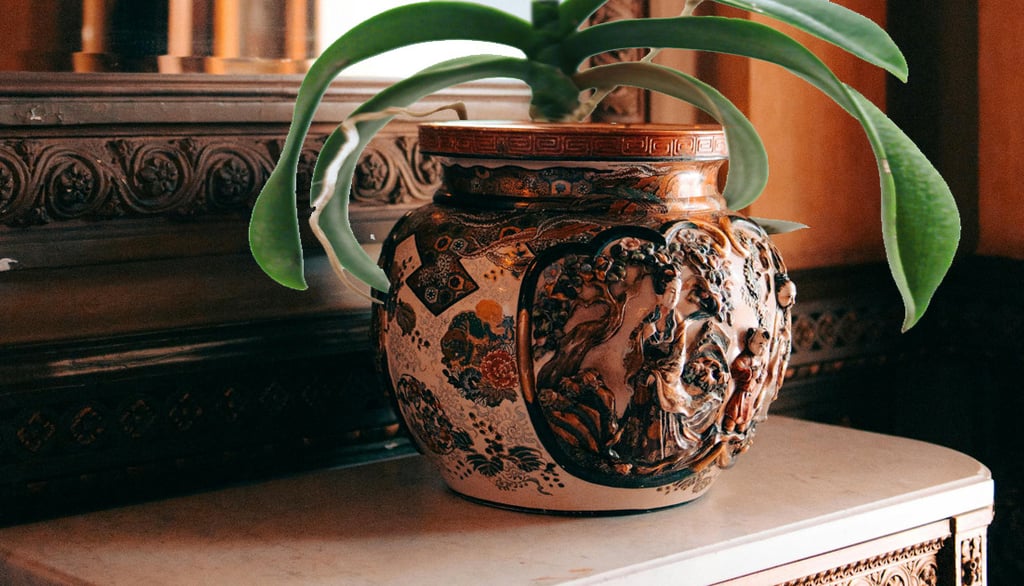
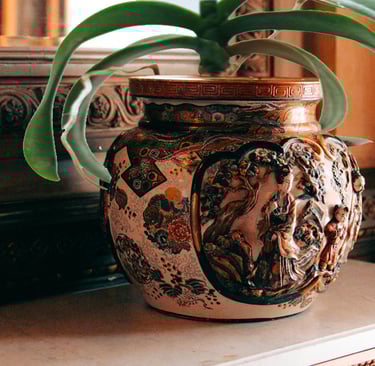
Walk into any great gallery and you’ll notice something funny: the “frame” changes the art. A simple sketch becomes commanding in a wide mat; a bold canvas feels even bolder in a quiet, spare surround. Plants work the same way—except their frame is three-dimensional, and alive. The sculptural vessel is not a container. It’s the plant’s stage, posture, and presence.
When we curate a pairing at Plant Love Gallery, we’re not just matching colors. We’re shaping personality. The vessel tells your plant who it gets to be in a room.
1) Tall, column-like vessels: the confident, upright leading role
A vertical vessel gives a plant instant poise. It pulls the eye upward and makes even a modest plant feel intentional—almost architectural. Snake plants, ZZ plants, dracaena, and upright philodendrons thrive here because the silhouette becomes a quiet statement: composed, strong, and modern. This shape is also a dream in entryways and corners—spaces where you want an elegant “hello” without noise.
The feeling: composed, self-possessed, gallery-clean.
The plant’s “voice”: “I belong here.”
2) Wide, bowl-like vessels: the generous, convivial presence
A bowl shape does something social—it widens the plant’s “shoulders.” Suddenly the composition feels welcoming and abundant. Trailing plants (pothos, scindapsus, string-of-hearts) become more expressive because the rim gives them a place to spill and cascade. Low, mounded plants feel lush rather than small. A bowl also reads as a center-of-table gesture: a living arrangement, not an afterthought.
The feeling: abundance, warmth, hostess energy.
The plant’s “voice”: “Come closer.”
3) Pinched waists and hourglass forms: elegance with tension
A vessel that narrows in the middle is inherently dramatic. It creates a sense of cinched refinement—like tailoring in sculpture. Pair it with plants that echo that movement: orchids, anthuriums, alocasias, or anything with strong stems and intentional spacing. These shapes feel collected, not decorated. They suggest taste that’s been patiently developed.
The feeling: couture, intentionality, subtle drama.
The plant’s “voice”: “Notice the details.”
4) Asymmetry and organic contour: the poetic, lived-in sculpture
Some vessels feel like they were discovered rather than made—weathered edges, uneven rims, forms that lean. These shapes bring out the plant’s wild poetry. Ferns, rhipsalis, hoyas, and any plant with movement or irregularity feels at home here. Organic vessels are especially powerful in serene rooms: they add soul without clutter.
The feeling: nature-forward, artful, emotionally true.
The plant’s “voice”: “I’m alive, and that matters.”
5) Strong geometric profiles: modern restraint, crisp expression
Cylinders, clean cones, sharp facets—these shapes edit a plant the way a minimalist room edits a life. They highlight structure: the ribs of a cactus, the fan of a palm, the clean leaves of a rubber tree. Geometry brings clarity. It’s ideal for clients who love design that whispers instead of performs, but still lands with authority.
The feeling: crisp, confident, impeccably curated.
The plant’s “voice”: “Less, but better.”
6) Textural surfaces (carved, grooved, cratered): depth, time, and story
Texture is where the collector’s heart lives. It adds time to an object—evidence of hand and intention. Texture also changes how light behaves: morning sun catches ridges; evening light softens pits. Pair textured vessels with plants that can hold their own: palms, monsteras, mature hoyas, lush pothos. The interplay becomes almost cinematic.
The feeling: collectible, storied, quietly luxurious.
The plant’s “voice”: “I have history.”
Now, a quick curator secret: your plant doesn’t need to be rare if the vessel is sculptural. A familiar pothos becomes notable when it’s staged with seriousness. That’s the boutique advantage—and why limited editions matter. One-of-one vessels don’t just hold a plant; they hold a point of view.
This is also why we love the “outer vessel” approach: your artwork stays pristine, while your plant lives its real life. You can swap the inner grow pot as seasons change, as you travel between homes, or as your tastes evolve—without sacrificing the integrity of the piece. The sculpture remains the constant; the greenery becomes your rotating exhibit.
So if you’re choosing with your eye—and you are—start with a question that curators ask every day:
Do you want this plant to feel bold, generous, refined, wild, modern, or storied?
Pick the vessel shape that tells that truth, and your plant will do the rest.